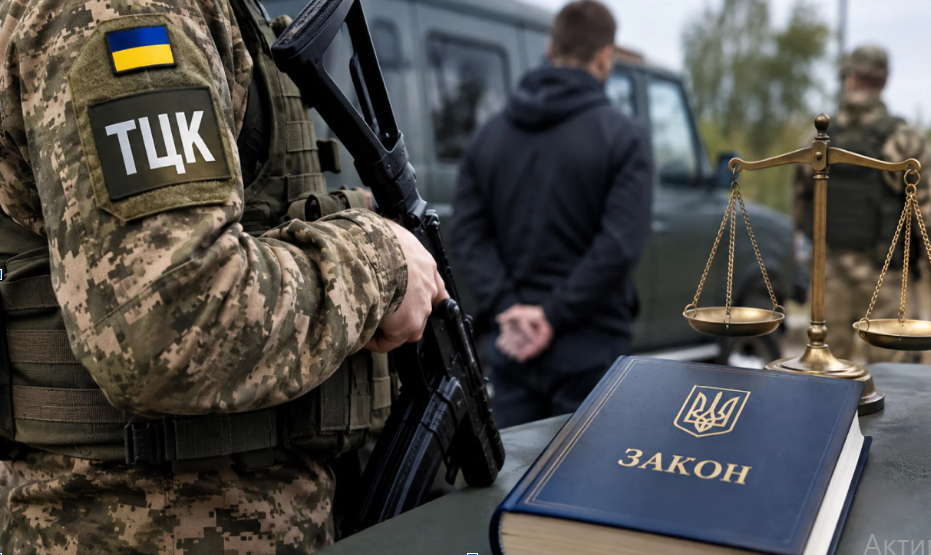
The challenges that mobilisation poses for Ukrainian businesses have become a widely discussed issue. Yet there is another dimension to this problem that rarely receives attention in business circles: the alleged use of Ukraine’s Territorial Recruitment and Social Support Centres (TCCs) as instruments of unfair competition and corporate warfare.
When one business partner seeks to force another out of a company, disrupt a competitor’s operations, or pressure senior executives into accepting unfavourable contractual terms, the aggressive tactics associated with corporate raiding in the 1990s are no longer necessary.
Instead of relying on criminal groups or fraudulent changes to corporate ownership records, unscrupulous actors may attempt to exploit military registration and mobilisation procedures as a means of exerting administrative and institutional pressure.
The Mechanics of Corporate Pressure
The alleged strategy follows a calculated pattern. Sensitive information about a company’s internal vulnerabilities, employee relationships, or the home addresses of key engineers and financial executives may be leaked to interested parties.
What follows is targeted disruption: unexpected inspections, summonses delivered directly to essential employees at their workplaces, and a deliberately heightened atmosphere of uncertainty and fear.
For a business, the consequences can be severe.
When production processes and contractual obligations depend on a limited number of highly specialised employees, the sudden loss or unavailability of those individuals can bring operations to a standstill.
Urgent mobilisation procedures may disrupt production schedules, jeopardise contractual commitments, and undermine a company’s competitive position.
In such circumstances, the party applying pressure may achieve its objective without ever entering a courtroom. Faced with mounting operational losses, a business owner may be forced to surrender negotiating leverage or accept terms that would otherwise have been unacceptable.
Submitting routine complaints through government websites is unlikely to provide an immediate solution to such a crisis. By the time a formal response arrives, the damage to business operations may already be substantial.
How Can Businesses Defend Themselves?
Countering this type of pressure requires more than conventional legal paperwork. It demands a thorough understanding of how government institutions operate, how administrative procedures are applied, and where legal safeguards can be effectively enforced.
At Verbitsiy Agency, we focus on identifying and eliminating vulnerabilities in a company’s military registration and compliance procedures before they can be exploited.
Proper employee registration, legally compliant mobilisation deferments and employee reservations, and adherence to the criteria for designation as a critically important enterprise form the foundation of an effective defence strategy.
These measures are not merely administrative formalities. They are essential safeguards for business continuity.
When pressure has already begun, our specialists respond immediately, providing on-site legal assistance, overseeing procedural actions, and challenging attempts at unlawful interference, coercion, or extrajudicial pressure against employees.
We also investigate potential sources of confidential information leaks and initiate appropriate legal measures against individuals or entities suspected of exploiting public institutions to advance private interests or facilitate hostile corporate takeovers.
Corporate conflicts have long since moved beyond the courtroom. Today, the ability to protect a company depends not only on the strength of its legal arguments but also on its preparedness to withstand coordinated administrative and operational pressure.
If your business is facing such a scenario, you need experienced legal professionals standing behind you.
Verbitsiy Agency provides the strategic expertise, institutional understanding, and rapid legal response needed to confront these threats at their earliest stages — before they escalate into a full-scale corporate crisis.
No responses yet