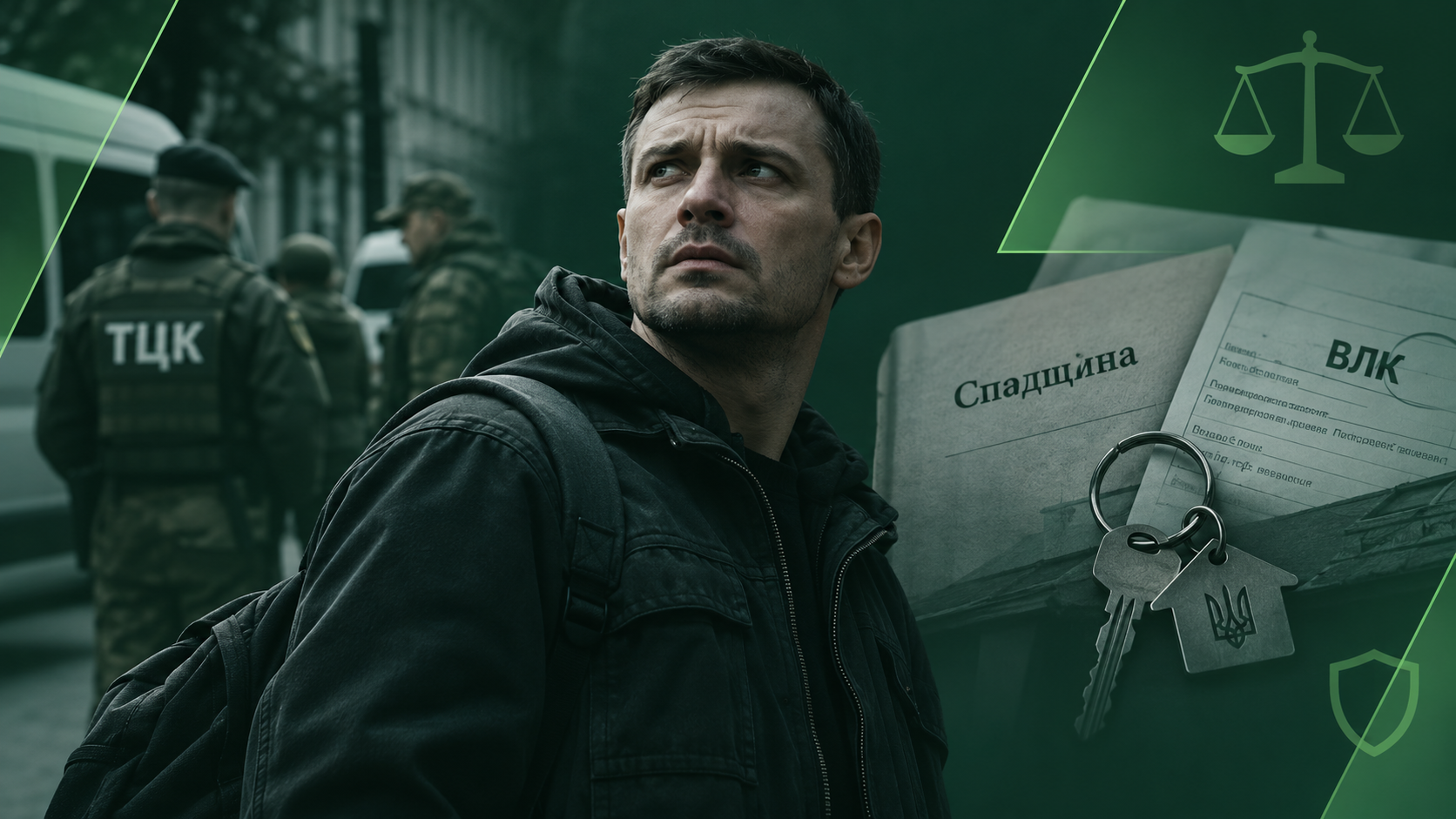
When the issue of Ukraine’s Territorial Recruitment and Social Support Centers (TCCs) comes up, public debate usually revolves around business. We calculate billions of hryvnias in economic losses, discuss factory shutdowns, disrupted contracts, shortages of engineers, and logistical challenges. This is a valid and important economic perspective. Yet somewhere behind these macroeconomic indicators, the individual disappears entirely. An ordinary man who does not run a corporation, has no exemption from mobilization, is not building an oligarchic empire, and is simply trying to go to work every day and provide for his family.
For these men, the rules of everyday life away from the front lines have become one vast legal gray area, where legitimate authority and outright abuse of power have effectively traded places.
When the state machinery switches into a mode of “meeting targets at any cost,” a person’s world rapidly shrinks to the four walls of his home. Everyday life becomes a relentless test of endurance. A routine commute to work, a quick stop at the neighborhood supermarket, or a short evening walk with the dog turns into a high-risk ordeal accompanied by constant anxiety. The fear of a minibus being suddenly stopped or an identity check on a street corner drives men into self-imposed house arrest, forcing them to withdraw from virtually all social activity.
Another dimension of the problem is the effective loss of access to essential services. An overwhelming fear of any contact with government institutions leads men to simply bury their heads in the sand. They avoid formalizing inheritance rights after the death of a parent, transferring property ownership, resolving family legal disputes, or even visiting doctors for routine medical examinations. Life is put on hold because state institutions, instead of providing security and legal guarantees, have come to be perceived as places of heightened danger.
Inevitably, living in a constant state of fear takes a devastating toll on mental and emotional well-being. The consequences extend far beyond the men themselves, affecting their wives, children, and elderly parents, who are forced to endure the same relentless psychological pressure.
Consider an example from our own legal practice. Oleksandr, an ordinary engineer from Kyiv, postponed visiting a notary for months after his father’s death. His reason was simple: he was afraid of approaching public offices because of the risk of encountering recruitment patrols near their entrances. The result was missed statutory deadlines, months of emotional distress, and ultimately only one remaining option: going to court to restore his inheritance rights to property that had belonged to his family all along.
Perhaps the most disturbing aspect of this situation is that ordinary citizens are left to face the system entirely on their own. They have no army of corporate lawyers, expensive advisers, or administrative connections to protect them. Procedural violations, the disregard of genuine medical conditions during examinations by Military Medical Commissions (MMCs), or unlawful detentions on the street are perceived as irreversible judgments against which there is no effective defense.
But that is not the case.
Even under today’s circumstances, legal mechanisms for protection still exist. They can be effective, but only when cases are handled by professionals who understand how the system operates from within and are not afraid to challenge officials who overstep their authority.
Staying at home, remaining silent, and hoping the problem will somehow pass is a direct path to losing not only peace of mind but also the last remaining safeguards of one’s civil rights. The law must work both ways. It cannot be a one-way street.
If you are experiencing pressure, witnessing clear abuses of authority, facing a purely bureaucratic approach during a Military Medical Commission examination, or encountering arbitrary actions by Territorial Recruitment Centers, do not remain silent.
Contact Verbitsiy Agency.
We know how to handle even the most complex cases. We assist with employee mobilization exemptions and reservations, provide tailored legal representation, protect our clients’ individual interests, and help people regain a sense of security, stability, and control over their lives.
No responses yet